7 Brutal Truths About a Laptop Battery Reset Tool (Fix Fake Battery Lies)
Laptop Battery Reset Tools | Why Your Battery is Gaslighting You And How to Fight Back

“Your Laptop Battery is Lying to You Here’s the Truth”
Let’s cut through the BS: Your laptop’s “5% battery remaining warning is as honest as a politician’s campaign promise. If your battery dies at 30%, charges to 100% in 10 minutes, or claims it’s “plugged in, not charging,” it’s gaslighting you. A laptop battery reset tool isn’t a luxury, it’s your only weapon against firmware lies, phantom drain, and early graveyard trips for your $150 battery.
What the Hell is a Battery Reset Tool? (No Jargon, I Promise)
Think of it as a “shock collar” for your battery’s brain. These tools:
– Reset the firmware: Clears corrupted data making your battery think it’s 90 years old.
– Recalibrate the charge gauge: Fixes “stuck at 0%” or “100% but dies in 5 minutes” nonsense.
– Wipe phantom drain glitches: Stops your laptop from sipping power like a margarita on vacation.
Laptop battery reset tool, battery calibration tool.
Battery health management, charge cycle reset, firmware corruption.
Free vs. Paid Tools – Which Won’t Screw You Over?
Free Tools (For Casual Users):
– Windows: `powercfg /batteryreport` → Generates a report showing your battery’s actual health vs. its drama.
– macOS: CoconutBattery → Spills the tea on charge cycles and lies.
– Built-In Brand Tools: Dell Power Manager, Lenovo Vantage (basic resets).
Paid Tools (For Pros & Desperate Souls):
– BatteryCare: Automates calibration for chronic battery liars.
– HWMonitor: Digs into voltage data to catch firmware fibs.
Best battery reset tool for Dell laptops, Free laptop battery calibration software.
But Why Does My Battery Even Need Resetting? The Dirty Secrets
– Manufacturer Shenanigans: Brands like HP/Dell bake obsolescence into firmware. Resetting fights back.
– Windows Updates: A bad update can turn your battery into a drama queen.
– Heat Damage: Gaming or Netflix binges warp battery logic. Reset tools are your intervention.
ACPI battery reset, embedded controller glitches, charge threshold errors.
Red Flags Your Battery Needs a Reset (ASAP)
– Sudden Death Syndrome: Dies at 20%? Reset or replace.
– Speed Charging: 100% in 10 minutes = firmware hallucinating.
– Swollen Battery: STOP HERE – Reset tools can’t fix this. Replace before it explodes.
Fix laptop battery not charging, Reset battery after sudden shutdown.
Don’t Let Your Battery Win – Calibrate or Perish
Your laptop’s battery isn’t “aging gracefully” it’s throwing tantrums. I’ll break down the step-by-step reset hacks for Windows, macOS, and even that dusty Lenovo from 2015. Spoiler: No tech degree required.
Battery reset software, CMOS battery reset.
BIOS/UEFI fixes, OEM calibration tools.
Laptop Battery Reset Tools – Step-by-Step Hacks to Silence the Lies
Your Battery is Still Lying? Let’s Force It to Tell the Truth
Your laptop’s battery isn’t just fibbing, it’s writing fanfiction. “100% charge, dies in 5 minutes”? “Plugged in, not charging”? Time to crack open the reset toolkit and bully your battery into honesty.
Method 1: Software Reset for Beginners (No Screwdrivers Needed)
Step 1: Windows Users – Command Prompt Kung Fu
How to reset laptop battery with software
1. Press `Win + X` → **Terminal (Admin).
2. Type `powercfg /batteryreport` → hit Enter.
3. Open the HTML report → check “DESIGN CAPACITY” vs. “FULL CHARGE CAPACITY”. If they’re wildly different, your battery’s a liar.
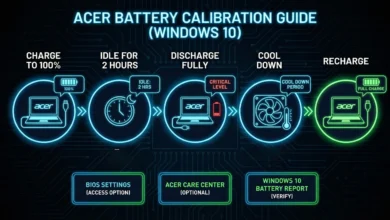
4. Drain to 0% → charge to 100% without unplugging. Forces the gauge to recalibrate.
Step 2: macOS – CoconutBattery Therapy
1. Download CoconutBattery (free).
2. Check “Current Charge” vs. “Full Charge Capacity”.
3. If skewed, drain to 0% → charge to 100% → reset SMC (Shutdown → Shift+Control+Option+Power for 10 sec).
Pro Tip: Use BatteryCare (Windows) to automate calibration every 30 days.
ACPI battery reset, charge gauge recalibration, SMC reset.
Method 2: Hardware Reset – For Stubborn, Drama Queen Batteries
Manual battery reset with paperclip
Step 1: The Power Drain Tactic
1. Unplug the laptop → remove the battery.
2. Hold the power button for 60 seconds. This evicts residual charge ghosts.
3. Reinsert battery → plug in → power on.
Step 2: CMOS Reset (For Desperate Souls)
1. Find the CMOS reset button (check your laptop’s manual – it’s tiny, near the battery).
2. Press with a paperclip for 10 seconds.
3. Reboot.
Warning: CMOS resets can wipe BIOS settings. Backup first if you’re not chaos-friendly.
CMOS battery reset, embedded controller reset, residual charge drain.
Brand-Specific Fixes – Because Dell/HP/Lenovo Love Drama
– Dell: Use Dell Power Manager → Battery Settings → “Express Charge” → toggle off to reset.
– HP: Download HP Battery Check → run diagnostics → follow prompts to recalibrate.
– Lenovo: Lenovo Vantage → Battery Gauge Reset → pray it doesn’t ask for a BIOS password.
– Gaming Laptops (ASUS/ROG): Enter BIOS → Advanced → Battery Health Charging → set to “Maximum Lifespan Mode”.
Reset Dell Inspiron battery,” “Fix ASUS ROG battery not charging.
I Reset It, But It’s Still Lying! – Troubleshooting the Unfixable
– Problem: “Battery stuck at 0%”* → Reinstall Microsoft ACPI-Compliant Control Method Battery drivers via Device Manager.
– Problem: “Dies faster after reset” → Lower screen brightness, disable RGB keyboard lighting (yes, really).
– Nuclear Option: Update BIOS/UEFI → visit OEM’s support site → cross fingers.
Battery driver reinstall, BIOS update, power profile optimization.
Don’t Let Your Battery Win – Fight Back Now
Your laptop’s battery is a toddler with a god complex. Reset it, recalibrate it, or replace it. I’ll unleash pro-level hacks: EEPROM resets, Terminal commands for macOS nerds, and how to argue with tech support until they cave.
Battery reset software, CMOS battery reset.
EEPROM reset, macOS Terminal hacks, OEM diagnostics.
Laptop Battery Chip Reset Software When Calibration Isn’t Enough
Let’s be brutally honest: when a normal battery reset or calibration tool fails, the problem usually isn’t Windows, macOS, or your charger it’s the battery’s internal chip. This is where laptop battery chip reset software comes into play. These tools don’t just “recalculate percentages”; they target the battery fuel-gauge chip stored inside the pack itself. That chip records charge cycles, voltage history, degradation data, and when corrupted lies with confidence.
Laptop battery chip reset software works by interacting with the battery management system (BMS) and, in advanced cases, rewriting data stored in the battery’s EEPROM. This is the same data manufacturers use to decide whether your battery is “healthy” or “end-of-life.” When the chip flags false degradation, your laptop throttles charging, shuts down early, or refuses to charge past a certain percentage even when the cells are physically fine.
Unlike standard battery calibration tools, chip-level reset software addresses firmware-level corruption, cycle count desynchronization, and charge threshold lockouts. This is why users searching for “battery stuck at 0%,” “dies at 30%,” or “plugged in not charging” often hit a wall with basic fixes. At this stage, recalibration is cosmetic the chip is still lying.
What Laptop Battery Chip Reset Software Actually Resets
Laptop battery chip reset software targets the fuel gauge IC, not the operating system. That’s a critical distinction.
It can reset or modify:
- Stored charge cycle counts
- False full-charge capacity limits
- Corrupted voltage reference tables
- Embedded charge threshold flags
- Battery aging data used by OEM firmware
This is why these tools are often paired with terms like SMBus communication, EEPROM rewrite, and battery fuel gauge reset. The software communicates directly with the battery controller, bypassing Windows or macOS entirely. Think of it as forcing the battery to forget its bad memories.
However, this also explains why chip reset tools are not consumer-friendly. Many require partial disassembly, SMBus access, or manufacturer-specific profiles. Used incorrectly, they can brick a battery permanently.
When You Should (and Shouldn’t) Use Battery Chip Reset Software
Use laptop battery chip reset software only when:
- Calibration resets fail repeatedly
- OEM tools (Dell, HP, Lenovo utilities) show conflicting battery data
- Battery health drops suddenly after an update
- Voltage readings fluctuate abnormally despite stable usage
Do not use chip reset software if:
- The battery is swollen or overheating
- Cells show physical damage
- Voltage drops instantly under light load
- The battery fails OEM diagnostics completely
At that point, no software chip-level or otherwise can fix chemistry. Replacement is the only safe option.
Popular Laptop Battery Chip Reset Software (Reality Check)
Most legitimate laptop battery chip reset software is not free, not polished, and not beginner-safe. Tools like RCBA-based utilities, SMBus editors, and OEM service software exist primarily for refurbishers and repair labs. Many are locked behind licenses or region-specific distributors.
This is why manufacturers don’t advertise chip resets: it undermines their replacement cycle. Instead, they push calibration tools that mask symptoms rather than fix root causes.
Why This Matters for Battery Longevity
When used correctly, laptop battery chip reset software can:
- Restore accurate charge reporting
- Prevent premature battery replacement
- Fix false degradation warnings
- Extend usable battery life by months (sometimes years)
But misuse can:
- Brick the battery controller
- Trigger safety lockouts
- Void warranties instantly
That’s the tradeoff power versus risk.
Laptop Battery BMS Reset Software (When Firmware Lies at the Core)
What Is Laptop Battery BMS Reset Software And Why It’s Different
Laptop battery BMS reset software targets the Battery Management System, not Windows, macOS, or your laptop brand’s utility. The BMS is the battery’s internal decision-maker. It controls charging limits, voltage cutoffs, temperature protection, and safety locks. When this system becomes corrupted, no amount of calibration will fix it because the operating system is no longer in control.
This is where laptop battery BMS reset software becomes critical. These tools communicate directly with the battery’s controller using SMBus protocols, bypassing the OS entirely. Instead of “retraining” the battery gauge, they reset or rewrite the logic that decides whether charging is allowed at all.
If your laptop:
- Shuts down at random percentages
- Refuses to charge past 60–80%
- Shows healthy cells but “battery not charging”
- Flags end-of-life instantly after an update
…you’re dealing with BMS-level corruption, not normal wear.
This is also why OEM utilities fail. Dell Power Manager, Lenovo Vantage, and HP diagnostics cannot override a locked BMS state they only read what the chip reports.
LSI terms used naturally:
battery management system reset, battery controller software, SMBus battery communication, firmware-level battery reset
What Laptop Battery BMS Reset Software Actually Resets
This is not magic and it’s not safe if abused.
Laptop battery BMS reset software can modify or clear:
- False charge cycle counters
- Locked charge thresholds (OEM caps)
- Corrupted voltage calibration tables
- Safety flags triggered by firmware bugs
- Aging data used to throttle charging speed
This is why BMS reset tools are commonly paired with phrases like battery fuel gauge reset, EEPROM rewrite, and embedded controller reset. The software forces the BMS to re-evaluate battery health based on real electrical data, not corrupted history.
Important truth:
If the battery chemistry is damaged, a BMS reset will NOT fix it.
But if the data is wrong, a BMS reset can bring a “dead” battery back to normal behavior.
When Laptop Battery BMS Reset Software Is the Right Move
Use laptop battery BMS reset software only if ALL of the following are true:
- Calibration resets failed multiple times
- Battery voltage readings are stable
- No swelling or overheating is present
- OEM tools show contradictory health data
- The issue appeared suddenly after an update
Do NOT use BMS reset software if:
- Battery is physically swollen
- Voltage collapses under light load
- Battery fails OEM safety diagnostics
- The laptop shuts down instantly when unplugged
At that point, the BMS is doing its job, protecting you from a lithium fire.
Why Manufacturers Don’t Want You Using BMS Reset Tools
Let’s be blunt.
Manufacturers avoid BMS reset software because it:
- Extends battery lifespan
- Prevents premature replacements
- Undermines planned obsolescence
- Reduces service revenue
That’s why these tools are hidden behind service manuals, refurbisher licenses, or obscure repair forums. OEMs prefer you replace a $150 battery instead of resetting a corrupted BMS flag that took one bad firmware update to break.
This is also why battery calibration tools are public, but BMS reset tools are not.
Risks of Laptop Battery BMS Reset Software (Read This Twice)
Used correctly, laptop battery BMS reset software can:
- Restore accurate charging behavior
- Fix false degradation warnings
- Unlock charging disabled by firmware
- Extend usable battery life significantly
Used incorrectly, it can:
- Brick the battery controller permanently
- Trigger irreversible safety lockouts
- Void warranties instantly
- Create unsafe charging conditions
This is not beginner software. It’s a last-resort tool not a maintenance step.
Laptop Battery Reset Tools Nuclear Fixes for Serial Liars & Tech Support Nightmares
Your Battery is Still Lying? Time to Go Full Mad Scientist
You’ve reset it. You’ve recalibrated it. You are begged. But your laptop battery still claims it’s at 100% while screaming “low battery” like a toddler. Fine. Let’s crack open the dark arts of battery hacking, EEPROM resets, Terminal commands, and arguing with tech support until they cry.
Method 1: EEPROM Reset For Tech Masochists
How to reset laptop battery EEPROM
Step 1: The RCBA+ Software Gambit
1. Download RCBA+ (paid, sketchy Russian site energy.rcbattery.com).
2. Connect your battery via SMBus (requires disassembling the laptop).
3. Run EEPROM rewrite → reset fuel gauge → pray you don’t brick the battery.
Step 2: SMBus Shenanigans
– Use HWMonitor Pro to read/write battery data via SMBus pins.
– Warning: One wrong voltage tweak = battery Gandalf (you shall not charge).
Battery fuel gauge reset, SMBus communication, EEPROM corruption.
Method 2: macOS Terminal Hacks For Silicon Valley Nerds
Terminal commands to reset MacBook battery
Step 1: Reset SMC (Again, But Angrier)
1. Shut down → plug in MagSafe.
2. Press Shift + Control + Option + Power for 10 seconds.
3. Release → power on.
Step 2: Deep Dive with `pmset`
1. Open Terminal → type `pmset -g cap` → check charge capacity.
2. If skewed, force recalibration:
sudo pmset -a hibernatemode 0
sudo pmset -a autopoweroff 0
3. Drain to 0% → charge to 100% → repeat until sanity fades.
Pro Tip: Use CoconutBattery’s Battery Health tab to track progress.
macOS SMC reset, `pmset` calibration, battery health degradation.
Brand-Specific Nuclear Options
Dell/HP/Lenovo:
– BIOS Flashback: Download the riskiest BIOS update from OEM support → cross fingers.
– Secret Key Combos: For Dell, spam Fn + F2 during boot to access Advanced Battery Diagnostics.
ASUS/ROG:
– Enter BIOS → Advanced → Embedded Controller → Battery Reset.
– Warning: This may trigger a firmware tantrum.
MacBooks:
– Apple Diagnostics Mode: Restart → hold D → run AHT (Apple Hardware Test) → pray Tim Cook smiles upon you.
Reset Dell BIOS battery settings, Fix MacBook AHT battery errors.
laptop battery reset tool
When to Surrender – Signs Your Battery is Beyond Saving
– Swollen Like a Zombie: Replace immediately. Reset tools can’t fix chemical tantrums.
– Post-Reset Voltage Spikes: If HWMonitor shows wild fluctuations (e.g., 12V → 3V), your battery’s toast.
– Factory Reset Fails: If OEM tools (Dell Power Manager, HP Support Assistant) still fail, call it quits.
Battery voltage fluctuations, swollen battery risks, OEM diagnostics.
How to Argue with Tech Support (And Win)
1. Log Everything: Screenshots of `batteryreport`, CoconutBattery stats, error codes.
2. Quote Warranty Law: Per FTC’s Magnuson-Moss Act, my warranty isn’t voided by a DIY reset.
3. Threaten Social Media: I’ll tweet this convo to @DellCares. Twice.
Pro Tip: Mention “battery safety hazard” – companies panic and send replacements.
FAQs:
Q: What does a laptop battery reset tool actually fix.?
A laptop battery reset tool corrects inaccurate battery readings caused by firmware glitches, corrupted charge data, or desynchronized charge gauges. It does not repair damaged battery cells but restores honest reporting so your laptop stops shutting down randomly or lying about percentages.
Q: Why does my laptop battery die at 20–30%.?
This usually happens when the battery’s fuel gauge or BMS data is corrupted. The cells may still hold charge, but the controller miscalculates remaining capacity, forcing shutdowns early as a safety response.
Q: Is battery calibration the same as a battery reset.?
No. Calibration retrains the charge gauge using full drain and recharge cycles. A reset clears corrupted firmware data. Calibration fixes mild errors; resets are needed when calibration no longer works.
Q: Can a laptop battery reset tool improve battery life.?
It won’t magically add new capacity, but it restores usable capacity that firmware falsely locked away. Many users regain hours of lost runtime after a proper reset.
Q: What is laptop battery chip reset software.?
Laptop battery chip reset software targets the battery’s internal fuel-gauge chip, rewriting incorrect cycle counts and capacity data stored in EEPROM. This is a deeper fix than OS-level tools and carries higher risk.
Q: When should I use laptop battery BMS reset software.?
Only when calibration, OEM tools, and normal resets fail and only if the battery shows stable voltage with no swelling. BMS reset software is a last-resort option for firmware-level corruption.
Q: Is laptop battery BMS reset software safe.?
It’s safe only when used correctly by experienced users. Incorrect use can brick the battery controller, trigger permanent safety lockouts, or create unsafe charging behavior.
Q: Why does my laptop say “plugged in, not charging”.?
This often indicates a locked charge threshold set by the BMS or corrupted firmware flags. Reset tools or BMS-level resets are often required to clear this condition.
Q: Can BIOS updates cause battery problems.?
Yes. BIOS or firmware updates can corrupt battery data tables, causing sudden health drops, charging limits, or false end-of-life warnings even on healthy batteries.
Q: Do OEM tools like Dell Power Manager or Lenovo Vantage really reset batteries.?
They perform basic recalibration only. They cannot override locked BMS states or rewrite corrupted EEPROM data, which is why severe issues persist after using them.
Q: Can battery reset tools fix swollen batteries.?
No. Swelling is a chemical failure, not a software issue. Any swollen battery must be replaced immediately to avoid fire or explosion risks.
Q: Why does my battery charge to 100% in minutes.?
This usually means the battery controller is misreporting capacity. The cells aren’t filling the firmware is guessing. A reset or chip-level recalibration is required.
Q: Will a battery reset void my warranty.?
Software-level resets typically do not. However, chip resets, EEPROM rewrites, or BMS tools may void warranties if detected. Always document symptoms before contacting support.
Q: How often should I recalibrate or reset my battery.?
Calibration every 2–3 months is reasonable. Full resets should only be done when symptoms appear, not as routine maintenance.
Q: When should I stop fixing and replace the battery.?
If voltage drops instantly under load, OEM diagnostics fail repeatedly, or swelling occurs, replacement is the only safe option. No reset tool can fix dead chemistry.
Conclusion:
Your laptop battery isn’t “aging gracefully.” In most cases, it’s being sabotaged by corrupted firmware, broken charge data, or a BMS that thinks your battery is years older than it actually is. A laptop battery reset tool exists to correct lies not to perform miracles. When used properly, these tools restore accurate charge reporting, unlock falsely restricted capacity, and prevent unnecessary battery replacements.
However, not all battery problems are software problems. Calibration fixes surface-level confusion. Chip reset software addresses deeper fuel-gauge corruption. Laptop battery BMS reset software operates at the core rewriting the very logic that controls charging and safety. That power comes with risk, and it should never be treated casually.
The smartest approach is progressive:
-
Start with calibration
-
Move to firmware and OS-level resets
-
Escalate only when evidence proves the battery hardware is still healthy
When resets work, you win months sometimes years of usable life. When they don’t, the battery isn’t lying anymore; it’s done. Knowing the difference is what separates smart troubleshooting from dangerous guesswork.
Your battery is replaceable. Your data and your safety are not.