How to Calibrate Mobile Sensors – Proven Methods That Work 2026
The Exact Steps to Stop Compass Drift, Screen Rotation Fails & Gyroscope Lag on Any Android

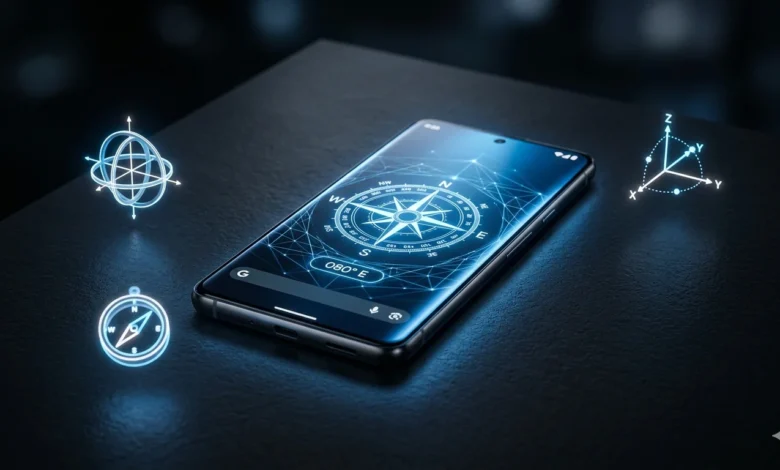
How to calibrate mobile sensors compass, gyroscope, accelerometer, and more is something most people never think about until something breaks. Your phone navigates, tilts, rotates, and tracks your movement because of a set of tiny sensors packed deep inside the hardware. Most people never think about them until something goes wrong. The compass starts pointing the wrong way. The screen refuses to rotate. A first-person shooter becomes unplayable because the view keeps drifting on its own. These aren’t software bugs and they’re not signs you need a new phone. In nearly every case, the fix is sensor calibration, and it takes less than five minutes when you know what you’re doing.
This guide covers everything what each sensor does, why they lose accuracy over time, the exact steps to recalibrate each one, and the apps worth using on Android 14 and Android 15. No fluff, no filler, just the complete process from start to finish.
What Are Mobile Sensors in Smartphones.?
Most people know their phone has a camera and a battery. Far fewer understand that there’s an entire hidden layer of hardware constantly reading the physical world around them measuring rotation, magnetic fields, pressure, movement, and light dozens of times every second. These are your phone’s sensors, and without them, almost nothing your phone does beyond making calls and browsing would work the way it does.
A smartphone sensor is a miniaturized electronic component, usually built using MEMS (Micro-Electro-Mechanical Systems) technology, that detects a specific physical property and converts it into a digital signal the operating system can read. The processor then uses that data in real time to power features like screen rotation, compass heading, GPS accuracy, augmented reality, step counting, fall detection, and motion-based gaming controls.
What makes modern Android phones impressive from a hardware standpoint is not just how many sensors they pack in, but how they combine sensor data. This technique is called sensor fusion using data from multiple sensors simultaneously to produce a more accurate, more stable reading than any single sensor could deliver on its own. Your screen’s rotation vector, for example, is not coming from one sensor. It’s a mathematically blended output from the gyroscope, the accelerometer, and the magnetometer working together.
When one sensor’s data drifts, the fusion output becomes unreliable. That’s when you start noticing real-world problems: heading errors in navigation, physics glitches in games, and auto-rotate triggering at the wrong angles. Understanding what each sensor is responsible for gives you the foundation to identify exactly which one needs attention.
Types of Sensors Found in Android Smartphones
Android phones typically carry between 8 and 15 sensors depending on the manufacturer and price tier. Here’s what’s actually inside your device and what each one does:
Magnetometer This is the hardware component behind your compass. It detects the Earth’s magnetic field across three axes and calculates your heading direction from that data. The problem with magnetometers is sensitivity. Earth’s magnetic field is weak between 25 and 65 microteslas depending on your location and everyday objects like speakers, metal furniture, magnetic phone cases, and even some cables generate local fields strong enough to throw the reading completely off. This is the sensor that most commonly needs recalibration.
Gyroscope Measures the rate of angular rotation around the phone’s X, Y, and Z axes. When you rotate your phone, the gyroscope is what detects how fast and in which direction it’s turning. It drives smooth screen rotation, gaming motion controls, VR and AR experiences, and panoramic camera stabilization. MEMS gyroscopes have a known weakness called bias drift a slow accumulation of error even when the phone is stationary which causes the screen to drift or gaming views to rotate without input.
Accelerometer Measures linear acceleration, meaning changes in speed and direction of movement. It detects tilt, shake, and step impact. Your step counter, auto-rotate, and activity tracking all run through the accelerometer. Physical impacts (dropping the phone), temperature changes, and long-term use can shift the accelerometer’s zero-point the baseline it treats as “perfectly still and flat” which throws off all features that depend on it.
Barometer Reads atmospheric pressure to estimate altitude. Used by weather apps and works alongside GPS to improve vertical positioning. Not commonly miscalibrated, but worth knowing about.
Proximity Sensor Detects nearby objects using infrared. Primarily turns the screen off during phone calls when you hold the phone to your ear.
Ambient Light Sensor Reads surrounding light levels to control automatic screen brightness.
GPS Receiver Works with the magnetometer and accelerometer for location accuracy and directional navigation.
How These Sensors Work Together Sensor Fusion Explained
No single sensor is perfect. The gyroscope is accurate for rapid rotations but drifts slowly over time. The accelerometer detects tilt but picks up vibration noise. The magnetometer gives stable long-term heading but is vulnerable to local interference. Sensor fusion solves this by having the operating system run all three outputs through a mathematical filter typically a complementary filter or a Kalman filter that takes the strengths of each sensor and suppresses the weaknesses.
The result is a combined rotation vector that’s far more stable and accurate than any one sensor could produce. This is why when your compass goes wrong, it’s not always the compass hardware that’s purely at fault it might be the calibration offset stored in the fusion algorithm that needs resetting. Understanding this helps you approach calibration more systematically rather than randomly trying fixes.
The Magnetometer (Compass Sensor) How It Drifts
The magnetometer uses Hall effect measurement to detect magnetic field strength in three dimensions. The values it reads are calibrated against a reference model of Earth’s magnetic field stored in the device. Over time, prolonged exposure to strong magnetic sources phone cases with magnetic closures, car mount magnets, wireless charging pads with strong magnets, even metal-heavy desk environments can create what’s called a hard iron bias in the sensor’s offset data. The result: your compass points the wrong direction consistently, by a fixed angle, even when you move the phone far from the source. This is the most common and most easily fixed sensor problem.
The Gyroscope Understanding Bias Drift
MEMS gyroscopes work by detecting the Coriolis effect on microscopic vibrating structures inside the chip. They’re engineered for high precision, but thermal changes cause the vibrating reference frequency to shift slightly, introducing a bias. This means the sensor reads a small, non-zero rotation rate even when the phone is perfectly stationary. Over hours of use, this tiny error accumulates into a noticeable drift. Calibration resets the bias value back to zero so the sensor correctly reads “no rotation” when the phone isn’t moving.
The Accelerometer Zero-Point Offset
The accelerometer’s calibration issue is simpler but equally impactful. It has a zero-point a reference that tells the sensor what “completely flat, no acceleration” feels like. Physical impacts shift this zero-point. If the phone was dropped hard or subjected to repeated vibration (common in vehicle mounts without damping), the zero-point shifts and the phone thinks it’s slightly tilted even when it’s flat on a table. This causes auto-rotate to trigger at wrong angles and step counters to overcount.
Why Mobile Sensor Calibration Is Important
Calibration is the process of resetting a sensor’s reference point back to an accurate baseline. It doesn’t repair hardware if a sensor is physically damaged, calibration won’t fix it. What it does is correct the software-level offset values the device uses to interpret sensor readings. Think of it as zeroing a scale before weighing something. The scale isn’t broken, it just needs to know where zero is.
The reason calibration matters practically is that a significant number of problems Android users attribute to software bugs, app crashes, or poor GPS performance are actually sensor calibration issues in disguise. When the magnetometer is off by 30 degrees, Google Maps routes you in the wrong direction from the start. When the gyroscope drifts, every gaming session becomes frustrating within minutes. When the accelerometer’s zero-point is shifted, your phone’s auto-rotate becomes erratic and your fitness tracking data becomes unreliable.
These problems are quiet they don’t throw up error messages or warning notifications. The phone just starts behaving slightly wrong, and users either tolerate it, factory reset unnecessarily, or replace hardware that didn’t need replacing. A proper understanding of sensor calibration saves time, money, and a lot of unnecessary frustration.
Calibration also matters for device longevity. Sensors that are consistently providing wrong data force apps to compensate the GPS module works harder, the rotation system makes constant corrections, and battery drain increases as a result. Properly calibrated sensors work efficiently and reduce background processing overhead.
The Real Impact of Uncalibrated Sensors on Daily Use
The effects of uncalibrated sensors aren’t just technical they show up in every day you use your phone. A miscalibrated compass doesn’t just affect dedicated navigation apps. It affects every app that uses location-based orientation: Google Maps walking navigation, AR apps like Google Lens and Pokémon Go, digital level tools, real estate apps with AR property overlays, and even some social media AR filters. All of them pull compass heading data from the magnetometer, and all of them fail silently when that data is wrong.
A drifted gyroscope impacts gaming, VR headset experiences, stabilized video recording, and any app using motion input. A shifted accelerometer affects fitness trackers, sleep monitors, driving apps, and every tilt-based game. The scope of the impact is much wider than most users realize because these sensors feed data to hundreds of apps running in the background, not just the ones you have open.
Which Features Depend Directly on Sensor Accuracy
Understanding which phone features depend on accurate sensors helps you quickly identify the source of a problem when something behaves unexpectedly:
Navigation accuracy Depends on the magnetometer for heading direction and the accelerometer for dead reckoning between GPS fixes. Both need to be calibrated for accurate turn-by-turn directions.
Auto-rotate Driven entirely by the accelerometer. If it rotates at wrong angles or refuses to rotate at all (despite the setting being enabled), the accelerometer’s zero-point is likely off.
Gaming and motion input Depends on both the gyroscope and accelerometer. Drift during gameplay and laggy motion response are gyroscope calibration issues.
AR and camera stabilization Uses gyroscope data for real-time stabilization. An uncalibrated gyroscope produces shaky, poorly stabilized footage and broken AR overlays.
Step counting and fitness tracking Driven by the accelerometer. An offset zero-point leads to step overcounting or undercounting, which throws off calorie calculations in health apps.
Altitude readings Driven by the barometer, which works alongside GPS for more accurate elevation data.
How Sensor Drift Affects GPS Accuracy
GPS accuracy on smartphones is a common frustration, and a surprising number of GPS problems trace back to the magnetometer rather than the GPS hardware itself. The GPS receiver provides position coordinates, but the direction indicator the blue arrow showing which way you’re facing in navigation apps comes from the magnetometer. When the compass is miscalibrated, the position can be accurate but the heading arrow points the wrong way, making it look like the GPS is jumping or unreliable. After performing compass calibration, users frequently report that their GPS navigation suddenly becomes far more accurate and responsive. The GPS hardware didn’t change the directional data feeding it did.
Gaming and AR Performance Tied to Gyroscope Health
Mobile gaming has evolved heavily toward gyroscope-based aiming and motion controls, and the quality of that experience depends entirely on gyroscope calibration. Games like PUBG Mobile, Call of Duty Mobile, and Free Fire all use gyroscope input for precise aiming. A drifted gyroscope introduces a constant bias in the input your view slowly pulls in one direction even when you’re not touching the phone. Competitive players who experience this often adjust their in-game sensitivity settings repeatedly trying to compensate for what is actually a sensor offset issue, not a sensitivity problem. Recalibrating the gyroscope resolves this immediately.
Signs Your Mobile Sensors Need Calibration
Your phone won’t tell you directly when a sensor needs recalibrating. There’s no “Sensor Error” notification, no warning banner, nothing in the system settings that flags a drift. You have to recognize the symptoms yourself, and knowing what to look for lets you fix the issue before it becomes a real problem in day-to-day use.
The good news is that the signs are fairly specific. Each sensor produces its own characteristic symptoms when it’s out of calibration, which means you can often identify exactly which sensor is the problem before you even start the fix. This section walks through the most common symptoms and which sensor is behind each one.
The timing of these symptoms matters too. If problems appear suddenly after dropping your phone, after placing it near a strong magnet, after a software update, or after extreme temperature exposure, those events are almost always the trigger. Sensor calibration issues don’t usually appear gradually over weeks they tend to have a clear starting point.
Compass Showing Wrong Direction Consistently
The clearest sign of a magnetometer calibration problem is a compass that consistently points in the wrong direction by a fixed angle. If you open your phone’s built-in compass app and compare it to a physical compass, a calibrated digital compass should match to within a few degrees. If yours is off by 30, 60, 90 degrees or more especially if it’s consistently off in the same direction every time you check the magnetometer’s hard iron offset needs to be reset.
A subtler sign is the blue heading arrow in Google Maps spinning or drifting while you’re standing still. The map might be perfectly positioned, but the direction indicator keeps rotating slowly even when you haven’t moved. This is the magnetometer producing unstable readings, often caused by recent exposure to magnetic interference. Moving away from the source and performing the figure-eight calibration motion usually resolves this within seconds.
Screen Auto-Rotate Not Responding Correctly
Auto-rotate problems are almost always accelerometer-related. The most common symptom is the screen rotating when you haven’t tilted the phone, or refusing to rotate even when you clearly have. A second symptom is auto-rotate triggering at the wrong threshold the screen rotating from portrait to landscape when the phone is only tilted slightly rather than properly horizontal.
Some users mistake this for a software toggle issue and keep checking the rotation lock setting, but if the setting is enabled and rotation is still behaving erratically, the accelerometer’s zero-point has shifted. Another giveaway: if your screen rotates perfectly in one direction but not the other (for example, it rotates to landscape left but not landscape right), the accelerometer’s axis offsets are uneven and need calibration.
Gyroscope Drift During Gaming or Video
Gyroscope drift is unmistakable if you know what it looks like. In a first-person game, the camera view slowly rotates or tilts in one direction without any input. In a racing game using tilt steering, the car pulls to one side even when you’re holding the phone flat. In video recording, the electronic image stabilization produces a slow, smooth, unnatural drift in one direction rather than the jerky shake it’s supposed to cancel.
A quick self-test for gyroscope drift: open any compass or spirit level app that displays live gyroscope values, place your phone completely flat on a stable surface, and watch the readings. A properly calibrated gyroscope should show values at or very near zero on all axes. If the values are slowly changing even by small amounts the gyroscope has drift that needs to be corrected.
GPS Keeps Jumping or Shows Inaccurate Heading
As discussed earlier, GPS position errors and compass calibration issues often look identical from the user’s perspective. If your GPS position is stable but the direction arrow spins or points the wrong way, it’s the magnetometer. If the position itself jumps around even when you’re standing still, that’s a different issue potentially the GPS receiver itself, a weak signal, or the phone switching between tower triangulation and satellite positioning.
A useful diagnostic: open Google Maps, stand still outside, and watch both the position dot and the heading cone. If the dot stays put but the cone spins, it’s a compass issue. If the dot moves around the map while you’re stationary, it’s a GPS reception issue, which may be helped partially by compass recalibration but is more likely a signal or hardware matter.
How to Calibrate Mobile Sensors on Android (Step-by-Step)
Before jumping into individual sensor calibration, there’s a baseline process for Android that covers multiple sensors at once or at least gets them into a state where individual calibration becomes effective. Android handles sensor calibration partly at the hardware level (through the sensor driver stack), partly at the OS level (through Android’s sensor service), and partly through apps. Understanding which layer you’re working at helps you pick the right approach for each problem.
Most Android phones don’t have a dedicated “calibrate all sensors” button in the main settings. Calibration happens either through built-in device diagnostics, specific app interactions that trigger the calibration routine, or third-party tools. The approach varies slightly between manufacturer skins Samsung One UI, Xiaomi MIUI, OnePlus OxygenOS, and stock Android each expose calibration options differently.
This section covers the universal methods that work across all Android devices, followed by manufacturer-specific paths in later sections.
Before You Begin Preparation That Actually Makes a Difference
Skipping preparation is the most common reason calibration doesn’t stick. The environment you calibrate in directly affects the quality of the calibration, especially for the magnetometer and accelerometer.
Move away from magnetic sources before calibrating your compass. This means leaving metal desks, moving away from speakers, removing magnetic phone cases and covers, and stepping away from wireless chargers. The calibration routine will store whatever baseline values the sensor is reading at that moment if it calibrates near a magnet, it calibrates around that magnet’s interference and will be wrong everywhere else.
Place your phone on a flat, stable surface for accelerometer calibration. Do not hold it in your hand, as even subtle hand tremors introduce error into the baseline reading. A non-metallic, non-vibrating surface a wooden table is ideal gives the accelerometer the cleanest possible zero-point to reference.
Restart your phone before running calibration if you’ve been experiencing persistent sensor issues. A fresh boot clears temporary sensor data that may have been carrying corrupted offset values in memory.
Using Built-In Android Diagnostics for Sensor Calibration
Android’s hidden diagnostic menu accessible on most devices through the dialer provides access to individual sensor testing and calibration tools that aren’t visible in normal settings.
For Samsung devices: Open the Phone app, dial *#0*# to open the hardware test menu. Select “Sensor” to access the sensor testing panel. You’ll see live readings for all sensors. This menu doesn’t always include a full recalibration option, but it lets you verify which sensor is producing incorrect values, which is valuable before you start.
For most Android devices: Dial *#*#426#*#* to access the GPS diagnostic menu for location and compass-related calibration. Some devices also support *#*#0*#*#* for a broader hardware check.
Google’s built-in compass calibration trigger: The most universally available calibration method on Android is through Google Maps. Open Google Maps, tap the blue location dot, and if the compass needs calibration, a message will appear prompting you to calibrate. Even when that message doesn’t appear, opening Maps and performing the figure-eight motion in a magnetically clean area forces a compass recalibration through Google’s location services stack.
Accessing the Device Diagnostic Menu
The diagnostic menu (also called the engineering menu or service menu) is a manufacturer-built interface that bypasses the normal Android settings UI and gives direct access to hardware test screens. The access codes vary by manufacturer, but the most universally useful ones are:
Samsung: *#0*# → Hardware test → Sensor
General Android: *#*#4636#*#* → Phone information (includes sensor and GPS data)
Xiaomi/MIUI: *#*#6484#*#* → Hardware test menu
Within these menus, the sensor test screens show real-time data output from each sensor. This lets you observe whether the gyroscope is reading non-zero values at rest, whether the accelerometer shows an offset when flat, and whether the magnetometer is producing stable magnetic field readings. Use these screens for diagnosis first, then proceed with calibration.
Using Google Maps for Quick Compass Calibration
Google Maps provides the most accessible compass calibration trigger available on any Android phone, without requiring any third-party app. The process takes under 30 seconds. Open Google Maps with an active internet connection, tap your current location dot (the blue circle), and look for the compass calibration prompt at the bottom of the screen. If it appears, tap it and follow the on-screen figure-eight animation. If it doesn’t appear automatically, tilt and rotate your phone through the figure-eight motion manually slow, deliberate figure-eights in the air, rotating through all three axes. Maps will detect the motion and trigger the calibration routine through Google Play Services’ sensor calibration interface.
How to Calibrate Mobile Sensors (Compass, Gyroscope, etc.) The Complete Deep Dive
This is the core technical process. If you’ve reached this section after working through the diagnosis in the sections above, you now know which sensors are causing problems and why. Here’s how to systematically recalibrate all of them individually, in the right order, using the right methods for your specific Android version.
The order matters. Always calibrate the magnetometer (compass) first, because compass data feeds into the sensor fusion calculation used by the gyroscope and rotation vector. Calibrating the gyroscope with a miscalibrated compass means the fusion output is still using bad reference data. Next, handle the accelerometer. Finally, test all three together by running a combined sensor test app to verify the outputs are within acceptable ranges before signing off on the calibration.
For users on Android 14 and Android 15, Google has refined the automatic background sensor calibration that runs through Google Play Services. This means that some calibration happens passively as you use your phone but it only works correctly when you’re in a magnetically clean environment and when the phone isn’t locked in a mount or case that prevents natural movement. Active manual calibration still produces better and faster results than waiting for the background process.
Calibrating All Sensors at Once vs. Individual Calibration
Some third-party apps market themselves as “calibrate all sensors in one tap” solutions, and while they exist, a blanket all-at-once calibration is not always the right approach. The reason is that different sensors need different conditions at the time of calibration. The compass calibration requires movement through a three-dimensional figure-eight path. The accelerometer calibration requires the phone to be completely still on a flat surface. You can’t satisfy both conditions simultaneously.
The better approach is sequential calibration: compass first (with movement), then accelerometer (with the phone stationary on a flat surface), then verify the gyroscope’s bias. This sequential method, while taking slightly longer, produces more accurate results than any one-tap solution and tends to hold its calibration for longer because each sensor’s reference point is established under optimal conditions.
What Each Calibration Actually Resets
When you run a compass calibration, the process resets the magnetometer’s hard iron and soft iron compensation matrices the mathematical corrections that account for permanent magnetic materials in the phone itself (like the speaker and motor) and environmental distortions. This is why compass calibration requires the figure-eight motion rather than just standing still: the phone needs to sample magnetic field data from many different orientations to build an accurate compensation model.
Gyroscope calibration resets the bias offset the non-zero reading the sensor produces when stationary. This is a single value (or a set of three values for X, Y, Z axes) stored in the device’s sensor calibration file, typically located in the device’s non-volatile memory or calibration partition. When you calibrate the gyroscope, the app or system writes a new bias value that zeroes out the drift.
Accelerometer calibration resets the offset applied to each axis’s output so that when the phone is flat on a surface, all three axes read the correct gravitational values (approximately 0, 0, 9.8 m/s² for a phone lying flat with the screen facing up).
Calibrate Gyroscope on Android 14 Step-by-Step
Android 14 introduced improved sensor calibration handling through the updated HAL (Hardware Abstraction Layer) that better preserves calibration data across reboots. Here’s the recommended calibration process:
- Place the phone face-up on a completely flat, stable, non-metallic surface. A wooden table or countertop works well.
- Open a sensor monitoring app such as PhyPhox or GPS Status & Toolbox.
- Navigate to the gyroscope sensor readout screen.
- Observe the X, Y, and Z readings. They should be very close to 0.000 when the phone is stationary.
- If any axis shows persistent non-zero values (say, 0.02 or higher consistently), use the “Calibrate Gyroscope” function in GPS Status or PhyPhox, following the on-screen instructions which typically involve placing the phone still for 10–15 seconds while the app records and stores a new bias offset.
- After calibration, leave the phone on the flat surface for 30 seconds and recheck values should now hold at near-zero.
Calibrate Gyroscope on Android 15 Step-by-Step
Android 15 further improved sensor data persistence and the calibration quality checks that happen through Google Play Services. The process is largely the same as Android 14, but Android 15 devices benefit from an additional automatic quality check that compares the new calibration data against expected values for the hardware model. If the calibration is significantly out of expected range, Android 15 may prompt a second-pass calibration automatically through Google Play Services.
For Android 15 devices, after running the manual gyroscope calibration through a third-party app, go to Settings → Location → Advanced → Google Location Accuracy, toggle it off and back on. This forces Google Play Services to re-evaluate its sensor fusion baseline using your freshly calibrated gyroscope data, which produces a cleaner fusion output than the manual calibration alone.
How to Calibrate Compass on Mobile
The compass is the single most frequently miscalibrated sensor in Android phones, and it’s also the most straightforward to fix. The calibration process works through the magnetometer’s internal compensation algorithm you move the phone through a specific motion pattern so the sensor can sample magnetic field data from dozens of orientations and build an accurate interference compensation map. Once that map is built and stored, the compass reads accurately until the phone is exposed to another significant magnetic source.
The critical thing to understand about compass calibration is that it’s inherently location-dependent and environment-dependent. The best calibration results come from performing the process outdoors, away from buildings, vehicles, and metal structures, in an area where Earth’s magnetic field is as undisturbed as possible. Indoor compass calibration near concrete, rebar, metal piping, and electronic devices is always less accurate than outdoor calibration, even if the technique is perfect.
That said, if your phone is primarily used indoors say, in an office for navigation within a building’s AR wayfinding system you may want to calibrate in the specific environment where you use the compass most. The calibration baseline will be tuned for that environment’s magnetic signature.
The Figure-Eight Calibration Method Done Right
The figure-eight motion is not just waving your phone around randomly. It’s a specific three-dimensional movement pattern designed to expose the magnetometer to the full range of orientations needed to build an accurate compensation matrix.
Hold your phone loosely in one hand. Move it slowly and smoothly through the air in a figure-eight pattern like you’re drawing the number 8 in the air. Crucially, you must rotate the phone through all three axes during this motion. This means tilting it nose-down, nose-up, face-left, face-right, and spinning it slightly as you trace the figure-eight. The goal is not speed but thoroughness covering all orientational angles so the magnetometer samples the field from every direction.
Three to five complete figure-eight repetitions is usually sufficient. You’ll know calibration has completed in Google Maps when the heading cone snaps from a wide, uncertain arc to a narrow, confident arrow. In dedicated compass apps, the compass needle stabilizes and stops swinging.
How to Calibrate Android Phone Compass Without an App
No third-party app required. Every Android phone can have its compass calibrated through Google Maps, which triggers the calibration routine natively through Google Play Services:
- Step outside or move to a location away from magnetic interference at least 2 meters from metal furniture, speakers, or strong magnets.
- Open Google Maps. Wait for your location to load.
- Tap your current location blue dot once.
- If a calibration card appears at the bottom, tap “Calibrate compass” and follow the on-screen animation.
- If no card appears, manually perform the figure-eight motion with your phone for about 20–30 seconds. Google Maps will detect the motion and update the calibration data in the background.
- After calibration, the heading arrow on your Maps location should snap to a stable, accurate direction. Test it by pointing your phone north and comparing with a physical compass they should agree within 5–10 degrees.
Calibrate Compass on Samsung Devices Specifically
Samsung devices running One UI have an additional compass calibration path accessible through Samsung’s built-in diagnostics. Open the Phone dialer and type *#0*#. In the hardware test menu that opens, select “Sensor.” You’ll see a compass reading in real time. Samsung’s sensor menu also provides a dedicated calibration button for the geomagnetic sensor. Tap it and follow the figure-eight motion prompt. After completion, Samsung stores the calibration data to the device’s calibration partition, which persists across reboots and factory resets at the hardware level.
Why Your Compass Keeps Going Wrong After Calibration
If you calibrate your compass and it drifts back to incorrect readings within hours or days, the cause is almost always ongoing magnetic exposure. Common culprits include: a magnetic phone case or wallet phone case with embedded magnets, a car vent mount with a built-in magnetic plate, a desktop wireless charger with exposed magnets, a metal storage tray or desk surface, or a belt clip with a magnet. Find and remove the magnetic source, then recalibrate. The calibration will hold indefinitely in a clean magnetic environment. If the compass drifts even without any obvious magnetic sources, the magnetometer chip itself may have a hardware-level damage issue from a significant drop.
How to Calibrate Gyroscope Sensor
The gyroscope is the sensor responsible for all of your phone’s rotation awareness the fluid, smooth way the screen responds when you tilt the device, the way games track your precise aiming movements, and the way video stabilization knows how to compensate for hand shake. When it drifts, all of those features become unreliable in ways that feel frustrating but hard to diagnose.
Understanding gyroscope calibration starts with recognizing that what you’re correcting is a bias a constant offset that the sensor adds to every reading it produces. A biased gyroscope doesn’t wildly misbehave. It produces readings that are just slightly wrong, all the time, in the same direction. In practice, this means a first-person camera view that slowly rotates left, or a tilt steering game that always pulls slightly right, or a panoramic photo that curves instead of staying level.
The calibration process for the gyroscope is the opposite of the compass instead of requiring movement, it requires the phone to be completely stationary. The calibration routine samples the sensor’s output while the phone is at rest and records the non-zero value it reads as the bias. It then subtracts that bias from all future readings, so that “stationary” correctly produces a reading of zero.
What Causes Gyroscope Drift and How Serious It Can Get
Several factors cause gyroscope drift to develop over time. Temperature is the primary one MEMS gyroscope resonant frequency shifts with temperature, and while modern chips include temperature compensation, significant thermal cycles (repeatedly getting hot and cooling down, common with heavy gaming sessions) can accumulate offset over time. Physical shock from dropping the phone can mechanically alter the resonant structure of the MEMS device at a microscopic scale, producing a sudden step-change in drift. And firmware-level sensor driver bugs can sometimes reset or corrupt the stored bias value, causing sudden onset of drift after a software update.
Mild drift values below 0.05 rad/s at rest is normal and usually not perceptible in daily use. Drift above 0.1 rad/s produces noticeable effects in games and VR. Drift above 0.5 rad/s is severe and will affect basic screen rotation behavior. Beyond a certain threshold, if calibration doesn’t correct the drift, the gyroscope chip has physical damage and calibration is not a solution hardware service is the only fix.
How to Calibrate Gyroscope on Android 14 and Android 15
The most reliable gyroscope calibration method available for consumer Android devices without rooting uses GPS Status & Toolbox or PhyPhox:
GPS Status & Toolbox method:
- Install GPS Status & Toolbox from the Play Store.
- Open the app and swipe to the sensor panel.
- Select the gyroscope sensor view.
- Place your phone completely flat on a stable, hard surface. No hands.
- Wait 10 seconds without touching the phone.
- Tap the three-dot menu and select “Calibrate sensors.”
- The app records the current drift values as the new bias baseline.
- Leave the phone still for another 15 seconds after calibration.
- Verify: the gyroscope readings should now sit at or near 0.00 on all three axes.
PhyPhox method:
- Install PhyPhox from the Play Store.
- Open the app and tap “Gyroscope.”
- Place the phone flat on a stable surface.
- Start recording. Observe X, Y, Z values.
- Note any persistent non-zero baseline values these are your bias readings.
- Use PhyPhox’s built-in calibration prompt or note the values and apply them as an offset in apps that allow manual gyroscope offset correction (common in gaming apps and FPV drone controller apps).
Manual Gyroscope Reset Method for Persistent Drift
When software calibration doesn’t fully resolve gyroscope drift, a manual hardware-level reset is sometimes available through the device’s engineering menu. This is more aggressive than app-based calibration and writes directly to the sensor driver’s calibration file.
On Samsung devices: Dial *#*#2663#*#* in the Phone app. This opens the touchscreen and sensor firmware update menu. Look for the gyroscope calibration option. Be cautious in this menu other options here affect touch sensitivity and display calibration. Use only the gyroscope calibration option.
On Xiaomi devices: Engineering mode accessible through *#*#6484#*#* → Hardware test → Gyro Calibration.
After using these menus, always restart the phone before testing the gyroscope output.
Gyroscope Calibration Specifically for Mobile Gaming
Mobile gamers have specific calibration needs beyond the general consumer use case. Games that use gyroscope aiming particularly battle royale titles require the gyroscope bias to be as close to zero as possible, but they also benefit from calibrating the gyroscope in your specific gaming posture. The bias offset is measured in a flat position, but most gamers hold their phone at an angle. Advanced gyroscope calibration for gaming involves:
- Performing the standard flat-surface calibration first.
- Entering your game’s gyroscope sensitivity settings and using the in-game “Reset Gyro” or “Calibrate” option (available in PUBG Mobile, CoD Mobile, etc.) while holding the phone in your actual gaming grip.
- Setting a comfortable, consistent starting posture that your in-game calibration will use as the “neutral” position.
This two-step process hardware bias calibration first, then in-game grip-position calibration produces the most stable and accurate gyro aiming experience possible on Android.
How to Calibrate Accelerometer on Mobile
The accelerometer is the workhorse of your phone’s motion sensing stack. It’s always on, always sampling, and its data feeds more features than most people realize. Getting it back to an accurate calibration state resolves a wide range of symptoms that individually seem unrelated erratic screen rotation, inaccurate step counting, unreliable auto-brightness triggers, and misbehaving tilt-based controls in apps and games.
Unlike the compass, which requires deliberate motion for calibration, and unlike the gyroscope, which requires complete stillness, the accelerometer calibration process needs the phone stationary and perfectly level simultaneously. The process records what the sensor reads when the phone is in a known physical state flat on a surface with screen up and uses that recording to calculate a correction offset for each of the three measurement axes.
If the accelerometer currently reads X: 0.15, Y: -0.20, Z: 9.95 when the phone is flat (ideal values are 0, 0, 9.81), the calibration calculates and stores offset values of -0.15, +0.20, and -0.14 to correct the output to the expected baseline. From that point forward, every reading the sensor produces has those offsets applied, bringing the reported values back in line with reality.
Why Accelerometer Accuracy Matters for Everyday Features
The accelerometer’s impact on daily use is often underestimated because many of the features it drives are so automatic that users don’t consciously think about them. Auto-rotate is the most obvious, but equally important are: fitness tracking accuracy (a shifted zero-point overestimates steps), sleep monitoring (movement detection thresholds depend on accurate baseline), fall detection on devices that support it (a miscalibrated accelerometer may either fail to trigger or trigger falsely), and phone-on-table detection (which silences notifications in some apps).
For users who rely on accessibility features that use phone tilt for hands-free input, accelerometer accuracy is not a minor issue it directly affects their ability to use their device. Getting the accelerometer properly calibrated is equally important for these users as any other aspect of device setup.
Step-by-Step Accelerometer Calibration on Android
The most reliable method for accelerometer calibration on Android uses the GPS Status & Toolbox app or a spirit level app that includes calibration functionality:
- Find a flat surface you can verify is level a table you trust to be flat, or better, use a physical spirit level to verify it first.
- Remove any case that might tilt the phone unevenly on the surface.
- Place the phone face-up on the flat surface. Do not hold it.
- Open GPS Status & Toolbox → Sensor screen → Accelerometer.
- Observe the X, Y, Z readings. Note any deviations from 0, 0, 9.81.
- Tap “Calibrate” (or the equivalent in your chosen app).
- Keep the phone completely still for 15–20 seconds while calibration runs.
- The app writes new offset values based on the recorded deviations.
- Verify the readings now show 0, 0, 9.81 (or very close).
Alternatively, search “spirit level calibrate” in the Play Store many spirit level apps include built-in accelerometer calibration as a core feature because their accuracy depends entirely on a correctly calibrated accelerometer.
Testing the Accelerometer After Calibration
After calibrating, verify the result before assuming it worked. Open a spirit level app and compare its reading on the same flat surface you just used for calibration it should read within 0.1 to 0.5 degrees of level. Test auto-rotate by rotating the phone in all four orientations: portrait up, portrait down, landscape left, landscape right. All four should trigger smoothly and at appropriate tilt angles (roughly 45–60 degrees from each starting orientation). If one or more orientations still fail to trigger, the accelerometer’s offset correction may not have been applied uniformly across all axes repeat the calibration process or try a different calibration app.
Best Apps to Calibrate Mobile Sensors
There are dozens of apps on the Play Store claiming to calibrate sensors, but the quality varies enormously. Many “calibration” apps do nothing more than display sensor readings, calling themselves calibration tools as a marketing tactic. A genuine calibration app must write new offset values to the sensor’s calibration data, either through the Android sensor API, through manufacturer-specific calibration service calls, or through interaction with Google Play Services’ calibration stack.
This section covers the apps that actually perform real calibration functions, are maintained and updated for Android 14/15, and don’t monetize through deceptive practices. Skip anything that shows no sensor numbers, asks for subscriptions before displaying data, or claims it calibrates your battery, RAM, or WiFi those are definitively fake tools.
GPS Status & Toolbox Best All-Around Option
GPS Status & Toolbox is the most comprehensive and honest sensor calibration and diagnostic tool available for free on Android. It shows live readings from all primary sensors GPS, magnetometer, accelerometer, gyroscope, and barometer and provides actual calibration functions for compass, gyroscope, and accelerometer through Google’s location API and direct sensor service calls.
The app’s calibration functions are invoked through Actions → Calibrate sensors, which runs the appropriate calibration routine for compass and linear sensors. The GPS triangulation view also shows HDOP (horizontal dilution of precision) and satellite count, which helps diagnose GPS accuracy issues that are separate from compass calibration. For most Android users, GPS Status & Toolbox is the only calibration app you need. It handles compass, gyroscope, accelerometer, and GPS accuracy in one place, uses standard Android APIs, and works across virtually all Android devices from Android 8 through Android 15.
PhyPhox Best for Advanced Users and Verification
PhyPhox (Physical Phone Experiments) was developed by RWTH Aachen University and is freely available on the Play Store. It’s primarily a physics education tool, but its detailed sensor readout screens make it the best available tool for verifying calibration quality. It shows raw, unfiltered sensor data for every sensor in the device, with full graphing capabilities, data export functions, and configurable measurement parameters.
For calibration purposes, PhyPhox is most useful in the verification step after calibrating with GPS Status or another tool, use PhyPhox to confirm the raw sensor outputs match expected values. It also includes accelerometer, gyroscope, and magnetometer measurement tools that let you identify which axis of which sensor is off before you start calibration, saving time on unnecessary calibration passes.
Sensor Kinetics Pro Best for Detailed Diagnostics
Sensor Kinetics Pro provides real-time graphs of all Android sensor outputs with an impressive level of detail. It displays sensor precision, resolution, update rate, and value range alongside live data graphs, making it the best diagnostic tool for identifying sensor hardware problems that won’t be fixed by calibration. If a sensor is showing values that fall completely outside its expected physical range for example, an accelerometer reading 50 m/s² when stationary, or a gyroscope showing 10 rad/s while the phone is still this indicates hardware damage, not a calibration issue. Sensor Kinetics Pro is the quickest way to make that determination.
For users deciding whether sensor calibration is worth pursuing or whether hardware service is needed, ten minutes with Sensor Kinetics Pro provides a clear answer based on actual sensor output data.
What to Avoid in Sensor Calibration Apps
The Play Store contains hundreds of apps with “calibrate” in the name that provide no actual calibration functionality. Key red flags: no numerical sensor readouts (real calibration tools always show data), claims to calibrate battery or WiFi (impossible), reviews that are clearly generated in bulk, and apps that require enabling accessibility permissions for basic sensor reading (a security risk with no legitimate justification). Any app claiming to “boost” sensor performance through a calibration process that takes two seconds is doing nothing. Real sensor calibration takes the time it takes because the sensor needs to sample enough data to calculate an accurate offset. Treat any instant “calibration complete” notification with heavy skepticism.
Tips to Maintain Accurate Mobile Sensors After Calibration
Calibration isn’t a one-time fix you do and forget. Sensor accuracy degrades over time and with use, and the rate of degradation depends almost entirely on how you use and store your phone. The goal after calibration is to keep the sensors in a clean environment so the offsets you’ve established remain valid for as long as possible.
The good news is that maintaining sensor accuracy is mostly about avoiding specific common mistakes, not actively doing anything complex. Once you know what degrades sensors fastest, avoiding those situations becomes routine. Most users who follow the tips in this section find they only need to actively recalibrate their compass two or three times a year the gyroscope and accelerometer even less frequently, unless the phone is dropped.
One point worth emphasizing: Android’s background sensor calibration through Google Play Services does provide ongoing passive calibration updates, particularly for the compass. These automatic updates work well under normal use conditions but are easily overwhelmed by significant magnetic interference. The passive system is a safety net, not a replacement for active calibration when problems appear.
Environmental Factors That Degrade Sensor Accuracy
Magnetic interference is far more common in daily environments than most people realize. The following objects and situations are the most frequent sources of compass calibration degradation:
Magnetic phone cases Any case with a magnetic closure, wallet flap, or ring magnet attachment directly touches the magnetometer’s environment. These are the single biggest cause of persistent compass errors. Switching to a non-magnetic case alone can dramatically improve compass stability.
Car mounts with magnetic plates The thin metal plate inside the phone that magnetic car mounts grip sits extremely close to the magnetometer. Using a magnetic mount for daily commuting can cause compass calibration to degrade within days of recalibration.
Wireless chargers While most standard Qi wireless chargers don’t significantly affect compass calibration, some models with high-power or poorly shielded magnetic coils can create enough field to shift the magnetometer’s offset during prolonged charging. If your compass degrades overnight consistently, try charging with a cable for a week as a test.
Metal surfaces Placing your phone face-down on a metal desk, metal nightstand, or refrigerator for extended periods exposes the magnetometer to reflected magnetic field variations.
Speaker proximity Large speakers contain powerful permanent magnets. Sitting your phone on or next to a speaker for extended periods is a common and underappreciated cause of compass drift.
Daily Habits That Keep Sensors Performing Well
Beyond avoiding magnetic sources, a few habits noticeably extend the period between necessary recalibrations:
Keep the phone moving during normal use. Android’s passive calibration system works better when the phone moves regularly through different orientations, as this gives the sensor fusion algorithm more data points to work with for automatic offset correction.
Avoid extreme temperatures. Thermal stress leaving the phone in a hot car, using it in freezing weather, running it hot during extended gaming accelerates gyroscope bias drift. Using a phone case that provides some thermal insulation in extreme environments helps.
Handle physical shocks carefully. Dropping the phone is the leading cause of sudden accelerometer offset shifts. A protective case that absorbs drop impact protects the sensors as much as the screen.
Periodically verify compass accuracy by checking it against a known reliable direction source. A quick check once a week takes five seconds and lets you catch calibration drift early, before it affects real navigation.
Does Your Phone Case Affect Sensor Readings.?
This is one of the most commonly asked questions about sensor calibration, and the answer is nuanced. A non-magnetic case made of plain silicone, TPU, polycarbonate, or basic leather without metal hardware has essentially zero effect on any sensor. The issue arises specifically with cases that contain magnets or significant quantities of metal.
Magnetic wallet cases, cases with ring holders that use magnets, cases with metal kickstands that fold and unfold magnetically, and cases designed to snap to magnetic car mounts all introduce magnetic fields close to the phone. Some high-quality magnetic cases (like Apple’s MagSafe system) are designed with carefully positioned magnets that avoid the compass chip location but Android phone case manufacturers rarely apply this level of engineering. If you’re using a magnetic case and experiencing persistent compass problems that return quickly after recalibration, switch cases before troubleshooting further.
Faqs:
Q: How do I calibrate the sensors on my Android phone.?
The fastest method is through Google Maps open the app, tap your location dot, and either follow the calibration prompt or manually perform the figure-eight motion for 20–30 seconds in a location away from magnetic interference. For gyroscope and accelerometer calibration, install GPS Status & Toolbox, place the phone flat on a stable surface, and use its “Calibrate Sensors” function under the Actions menu. For Samsung specifically, the *#0*# hardware test menu provides direct access to the geomagnetic sensor calibration tool.
Q: Why does my mobile compass keep showing the wrong direction.?
The most common cause is magnetic interference from objects near the phone magnetic phone cases, car mount magnets, wireless charger coils, or metal surfaces. The magnetometer picks up these fields and stores them as part of its calibration baseline. Remove the magnetic source, then perform the figure-eight calibration motion in Google Maps or a compass app outdoors. If the compass corrects and then degrades again within days, the magnetic source is still in your phone’s environment.
Q: How do I fix auto-rotate not working properly on Android.?
Auto-rotate is controlled by the accelerometer. If it’s enabled in settings but still not working correctly, the accelerometer’s zero-point has shifted. Place the phone face-up on a flat, stable surface, install GPS Status & Toolbox, navigate to the accelerometer sensor screen, and use the calibration function. After calibration, test auto-rotate in all four orientations portrait up, portrait down, landscape left, landscape right. If one specific orientation still fails to trigger, that axis of the accelerometer may need a second calibration pass.
Q: Do sensor calibration apps from the Play Store actually work.?
Some do and some don’t. Apps that show live numerical sensor data and write calibration offsets through Android’s sensor API or Google Play Services like GPS Status & Toolbox and PhyPhox perform genuine calibration functions. Apps that show no sensor numbers, complete “calibration” in two seconds, or claim to calibrate battery, RAM, or WiFi signals are fake tools that change nothing. A real calibration app always displays actual sensor values before and after the process so you can verify the change.
Q: Can calibrating my phone’s compass improve GPS accuracy.?
Yes, in a specific and important way. GPS hardware provides coordinate accuracy, but the heading direction arrow in navigation apps showing which way you’re facing comes from the magnetometer. A miscalibrated compass gives accurate position data but wrong direction data, which makes navigation apps appear to have poor GPS performance. After compass calibration, the direction arrow stabilizes and navigation becomes significantly more intuitive. It doesn’t improve satellite lock speed or coordinate precision, but it resolves the most common real-world GPS navigation complaint.
Q: How often should I calibrate my phone’s sensors.?
For most users, compass calibration every 2–3 months is sufficient under normal conditions, or immediately after being near significant magnetic sources. Gyroscope calibration is needed only when drift symptoms appear typically after extended heavy gaming use or after dropping the phone. Accelerometer calibration is the most infrequent, needed mainly after physical impact or if auto-rotate develops problems. There’s no benefit to calibrating more frequently than symptoms require.
Q: Can a phone case cause sensor problems.?
Yes, but only if it contains magnets or significant metal components. Plain silicone, rubber, and hard plastic cases have no effect on sensors. Magnetic wallet cases, ring-grip cases with magnetic attachments, and cases designed for magnetic mounts introduce magnetic fields close to the magnetometer and are a leading cause of compass drift. If you’ve been experiencing persistent compass issues, removing the case and testing for a few days is a quick way to determine if the case is the source.
Q: Why does my gyroscope drift while I’m gaming.?
Gyroscope drift during gaming is caused by thermal bias shift the gyroscope chip’s reference frequency changes as the phone heats up during heavy use, producing an increasing bias offset that manifests as slow view drift. Short-term solution: use your game’s built-in gyroscope reset function (most battle royale games have this mapped to a button). Long-term solution: perform a hardware-level gyroscope calibration using GPS Status & Toolbox when the phone is at room temperature, and ensure the phone has adequate cooling during long gaming sessions to minimize thermal drift.
Q: Will a factory reset fix sensor calibration problems.?
A factory reset does not fix hardware-level sensor calibration issues and rarely helps with software-level ones. Sensor calibration data is typically stored in a dedicated calibration partition or in non-volatile memory that factory resets don’t touch. If a reset does appear to fix a sensor problem, the cause was likely a corrupted sensor driver configuration or app conflict, not the calibration data itself. For genuine calibration issues, the targeted calibration methods described in this guide are far more effective than a factory reset and don’t require wiping your data.
Q: What is the figure-eight motion and why does compass calibration require it.?
The figure-eight motion is a three-dimensional movement pattern tracing the number 8 in the air while rotating the phone through all angles that exposes the magnetometer to the Earth’s magnetic field from dozens of different orientations simultaneously. The compass calibration algorithm needs multi-directional magnetic field samples to calculate the hard iron and soft iron compensation values that account for the phone’s internal magnetic components and local environmental interference. Simply pointing north isn’t enough because that only samples one direction. The figure-eight pattern, done slowly and with full rotation through all three axes, provides the complete dataset the algorithm needs to build an accurate compensation model.
Conclusion
Here’s the honest truth that most tech guides skip over: your phone is not a static piece of hardware. It’s a constantly adapting system of tiny components that respond to heat, movement, magnetic fields, physical impact, and even the environment where you use it every single day. The sensors inside it the compass, the gyroscope, the accelerometer are not set-and-forget chips. They drift. They shift. They pick up interference. And when they do, the phone doesn’t throw up a red warning sign. It just starts behaving slightly wrong, in ways that are annoying enough to ruin your navigation or gaming experience but subtle enough that most people never trace the problem back to its real source.
I’ve walked you through the complete picture in this guide from what each sensor actually is at a hardware level, to why they lose accuracy, to the exact steps to get each one back in line. None of it is complicated once you understand what’s actually happening inside the device. The compass needs the figure-eight motion to rebuild its interference map. The gyroscope needs to sit completely still on a flat surface so the software can record its drift baseline and zero it out.
The accelerometer needs a verified flat surface and no hand tremors during the calibration window. These aren’t arbitrary rituals each requirement exists because of the specific physics of how each sensor works and what kind of data the calibration algorithm needs to do its job correctly.
What I want you to take away from this is a shift in how you think about these problems. The next time your Google Maps arrow spins while you’re standing still, you won’t waste an hour uninstalling and reinstalling the app. You’ll step outside, do the figure-eight, and be done in 90 seconds. The next time your game camera drifts right even when you’re holding the phone straight, you won’t blame your sensitivity settings. You’ll run GPS Status, place the phone flat, calibrate the gyroscope, and get back to playing in under three minutes.
The next time auto-rotate starts behaving erratically, you won’t factory reset your phone and lose everything. You’ll open a spirit level app, put the phone on your desk, calibrate the accelerometer, and watch the problem disappear immediately.
That’s the real value here not just fixing today’s problem, but building the knowledge to fix any sensor problem that comes up in the future, on any Android device, across any version of the OS. The tools are free. The process is straightforward. And now you have the understanding to use both of them correctly.
One last thing worth remembering: no app, no guide, and no calibration process can fix physically damaged hardware. If you’ve followed every step in this guide, used the right tools, calibrated in a clean environment, and the sensor still produces wildly wrong values check it in Sensor Kinetics Pro and look at the raw numbers. If a gyroscope is reading 5 rad/s while the phone is sitting still on your desk, the chip has physical damage.
If the magnetometer produces field readings ten times stronger than Earth’s magnetic field from a room with no electronics in it, the chip is gone. In those cases, calibration has done all it can do, and the next conversation is with a repair shop. But in my experience, the vast majority of sensor problems that real people encounter in real day-to-day use are calibration issues not hardware failures and everything you’ve read here will handle them completely.
Keep your magnetic cases off the compass. Keep the phone out of extreme heat during long gaming sessions. Drop it on a carpet, not tile. And do a quick compass check every couple of months. Do those four things and your sensors will stay accurate far longer than they would otherwise. That’s not complex maintenance it’s just knowing how the tool in your pocket actually works.
Also Read:
- 20 Ways to Fix Android Phone Touch Screen Problems
- Fixing Touchscreen Issues & Calibration on Android
- How to Calibrate Screen Color & White Balance on Android Devices
- Fixing White Balance Issues on a Top-Tier Android Handset
- How to Calibrate Compass on Samsung S22
- Why Is My Samsung S22 Touch Not Working Properly
- How to Calibrate Samsung S22 Screen
- iPhone Compass Calibration Guide
- Apple Watch Calibration Accuracy Fixes
- Calibrate Phone — Fix Ghost Taps, Battery Issues & More
- How to Fix iPhone Phantom Touch
- Battery Drain vs Battery Health — 4 Truths Android Users Must Know
- 12 Proven Ways to Fix Android Battery Problems Fast