6 Accurate Ways | Can I Use a Kitchen Scale for Liquids?
How to Use a Kitchen Scale for Liquids Correctly (Step-by-Step Accuracy Guide)

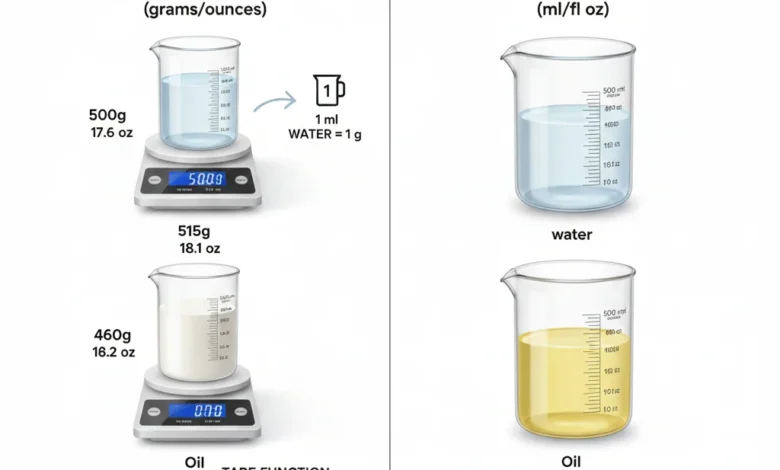
Can I Use a Kitchen Scale for Liquids? Yes, you can use a kitchen scale for liquids, and in many situations, it’s actually more accurate than measuring cups, especially for baking, coffee, and precise recipes. A kitchen scale measures weight, not volume, which means it works perfectly for liquids as long as you understand density and unit conversion. This is where many people get confused and competitors fail to explain properly.
Most modern digital kitchen scales can measure in grams, ounces, and pounds, and liquids like water, milk, oils, and syrups have predictable weights. For example, 1 milliliter of water weighs almost exactly 1 gram, making a kitchen scale ideal for liquid measurement when accuracy matters. This is why professional bakers, foodservice staff, and coffee brewers rely on weight-based measuring instead of volume.
Unlike liquid measuring cups, a kitchen scale removes guesswork caused by meniscus errors, uneven surfaces, and inconsistent cup sizes. When you place a container on the scale and use the tare function, you can measure liquids directly into the bowl with high precision. This method improves measurement consistency, portion control, and recipe repeatability.
However, not all liquids weigh the same. Oils, syrups, and honey have different densities, so understanding grams-to-milliliters conversion is essential. A kitchen scale doesn’t replace knowledge, it enhances it. When used correctly, it becomes one of the most reliable tools for liquid measurement, baking precision, and ingredient accuracy.
Why Weight-Based Measuring Works Better Than Volume for Liquids
Volume-based tools like cups measure space, not substance. This is fine for casual cooking, but it fails in precision tasks like baking or coffee brewing. A kitchen scale focuses on weight, which stays consistent regardless of container shape or pouring technique.
Liquids behave differently in cups depending on temperature, surface tension, and pouring angle. Weight eliminates these variables. That’s why recipes written by professionals increasingly specify grams instead of fluid ounces. Using a kitchen scale for liquids aligns your kitchen with modern, accuracy-first cooking standards.
Can a Kitchen Scale Measure Liquid Volume Accurately?
A kitchen scale doesn’t measure volume directly, but it can calculate volume indirectly using known liquid densities. For water-based liquids, the conversion is nearly 1:1. For thicker liquids like oil or milk, slight adjustments are required, but the result is still more precise than eyeballing a cup.
When paired with basic conversion knowledge, a kitchen scale becomes a powerful tool for liquid measurement, baking consistency, and recipe conversion, without needing multiple measuring tools.
Best Situations to Use a Kitchen Scale for Liquids
A kitchen scale is ideal when:
- Measuring water, milk, coffee, or oil
- Following European or professional recipes
- Baking where precision matters
- Tracking portion control or weight loss
- Brewing coffee where grams matter more than milliliters
In these cases, a scale delivers repeatable, accurate results every time.
Can I Use a Kitchen Scale for Liquids Accurately? (Weight vs Volume Explained)
Yes, you can use a kitchen scale for liquids, but only if you understand the critical difference between weight and volume. This is where many people get confused and where competitors often fail to explain things clearly.
A kitchen scale measures weight (grams, ounces, pounds), while most liquid recipes use volume (milliliters, fluid ounces, cups). These two are not always equal because liquids have different densities. For example, 100 ml of water weighs about 100 grams, but 100 ml of oil weighs closer to 92 grams. This difference matters in baking, coffee brewing, and precision cooking.
When someone asks, “Can you use a scale to measure liquid?” the honest answer is: yes, but only when weight-based measuring makes sense for that specific liquid. This is why professional kitchens and foodservice staff use a scale to measure small quantities and individual ingredients because weight-based measuring is more consistent than volume.
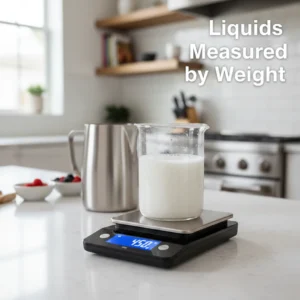
Using a digital kitchen scale with a tare function allows you to zero out the container and measure only the liquid itself. This method improves accuracy, reduces cleanup, and ensures repeatable results especially in baking where precision matters more than convenience.
Why Weight-Based Measuring Is More Accurate Than Cups
Volume measurements depend on how you pour, the container shape, and even surface tension. A liquid measuring cup filled to the line can vary slightly every time. Weight does not.
That’s why baking precision relies heavily on weight-based measuring for baking. When you use a kitchen scale, you remove guesswork. Grams don’t lie cups do.
This is also why professional bakers prefer grams over milliliters, and why measurement consistency improves dramatically when switching to a digital scale. Even for liquids like water, milk, or oils, weighing them produces more consistent results than eyeballing fluid ounces.
If you care about baking consistency, portion control, or recipe conversion, a kitchen scale becomes essential — not optional.
The Role of Liquid Density in Kitchen Scale Measurements
Density explains why some liquids can be measured easily by weight, while others cannot be converted directly.
- Water: 1 ml ≈ 1 gram (easy)
- Milk: Slightly heavier than water
- Oil: Lighter than water
- Honey & syrups: Much heavier
This is why conversion (grams to milliliters) must account for density of liquids. Many modern recipes include both weight and volume to avoid confusion.
If your recipe provides grams, use your kitchen scale. If it provides milliliters, use a liquid measuring cup unless the liquid is water and the conversion is clearly stated.
Can You Use a Food Scale for Liquids Like Water, Milk, and Oil?
Yes, you can use a food scale for liquids, and in many cases it’s the better option, especially for water-based liquids.
Best Liquids to Measure with a Kitchen Scale
- Water
- Milk
- Coffee (brewing ratios)
- Vinegar
- Broth
These liquids have predictable density, making them ideal for digital kitchen scale measurements.
Liquids That Require Caution
- Cooking oils
- Syrups
- Honey
- Alcohol
These require either a density conversion chart or a recipe that specifies grams instead of milliliters.
This distinction is crucial for people asking:
- Can you use a food scale for liquids?
- Can you use a scale to measure volume?
The answer depends entirely on the liquid type and recipe format.
Using the Tare Function for Liquid Measurement
The tare function is what makes kitchen scales powerful for liquids.
How it works:
- Place your container on the scale
- Press “tare” to zero it
- Pour the liquid until you reach the target weight
This eliminates container weight and improves accuracy in measurement. It’s especially useful for measuring oils, milk, and coffee water ratios.
If you’ve ever wondered “How do I use a kitchen scale?” this is the most important feature to master.
Units of Measurement That Matter Most for Liquids
A quality kitchen scale supports:
- Grams (most accurate)
- Ounces
- Pounds (for larger quantities)
Some scales display fluid ounces, but this setting is often misleading. As many experts note, fluid ounces on kitchen scales can be inaccurate because they assume water density. That’s why weight-based units are safer.
When a Kitchen Scale Is Better Than Liquid Measuring Cups
There are situations where a kitchen scale clearly outperforms liquid measuring cups:
- Precision baking
- Recipe conversion
- Portion control for cooking
- Coffee brewing ratios
- Weight loss tracking
When consistency matters more than speed, use the scale.
That’s why many people searching “how to use a kitchen scale for weight loss” or “how to use a kitchen scale for baking” eventually stop using cups altogether.
Can I Use a Kitchen Scale for Liquids the Right Way? (Practical Method Explained)
Yes, you can use a kitchen scale for liquids, but only if you follow the correct method. Most people get inaccurate results because they treat liquids the same as dry ingredients. A kitchen scale measures weight, not volume, so the key is understanding density, units, and the tare function.
When you place a liquid container directly on a digital kitchen scale, the scale doesn’t know if it’s water, oil, or milk. it simply measures mass. This is where accuracy in measurement depends on how you zero the scale and which unit of measurement you choose (grams, ounces, pounds).
For liquids like water, milk, or thin sauces, weight-based measuring is actually more precise than using liquid measuring cups. That’s why professional kitchens, bakeries, and foodservice staff use scales to measure small quantities and individual ingredients.
Step-by-Step: How to Measure Liquids Using a Kitchen Scale
Using a kitchen scale for liquids becomes simple when broken into steps:
- Place an empty container on the scale
Use a bowl, cup, or beaker suitable for liquids. - Press the tare function
This resets the scale to zero and removes container weight a critical step for accuracy. - Select the correct unit
Choose grams for best precision. Most liquids are easiest to measure in grams. - Pour the liquid slowly
Add the liquid until you reach the target weight. - Stop at the exact value
Digital kitchen scales respond instantly, making portion control easier.
This method ensures measurement consistency, especially for baking precision and recipe conversion.
Why Grams Are Better Than Fluid Ounces on a Kitchen Scale
Many kitchen scales show fluid ounces, but this setting is often misleading. Fluid ounces measure volume, while the scale measures weight. This mismatch causes errors, especially with oils, syrups, or dense liquids.
For example:
- Water: 1 gram ≈ 1 milliliter (easy conversion)
- Milk: Slightly heavier than water
- Oil: Lighter than water
That’s why grams and milliliters are the most reliable combination when measuring liquids with a scale. Advanced bakers and chefs rely on weight-based measuring for baking because it eliminates guesswork.
Understanding Liquid Density (Why Not All Liquids Weigh the Same)
Density is the reason a kitchen scale works differently for liquids than measuring cups. Two liquids with the same volume can weigh differently.
Examples:
- 100 ml of water ≈ 100 g
- 100 ml of oil ≈ 90 g
- 100 ml of honey ≈ 140 g
This is why a scale is superior for ingredient measurement, especially when recipes demand baking consistency.
If you rely only on volume, your recipes can fail. If you rely on weight, results stay consistent every time.
Can You Use a Food Scale to Measure Liquids for Baking?
Absolutely, and it’s recommended.
Using a food scale for liquids improves:
- Baking precision
- Portion control for cooking
- Recipe scaling
- Ingredient consistency
This is especially useful when working with:
- Oils
- Water
- Milk
- Coffee brewing ratios
- Sauces and syrups
Professional bakers almost never use cups; they depend on digital scales for both dry and liquid ingredients.
Common Mistakes When Using a Kitchen Scale for Liquids
Even with a good scale, mistakes can ruin accuracy:
- Forgetting to use the tare function
- Using fluid ounces instead of grams
- Pouring liquids too fast
- Ignoring liquid density
- Using an uncalibrated scale
Regular kitchen scale calibration and basic scale maintenance ensure long-term accuracy.
Digital vs Mechanical Scales for Liquid Measurement
While mechanical scales still exist, digital kitchen scales are far superior for liquids due to:
- Higher precision
- Faster response
- Easier unit switching
- Built-in tare function
Mechanical scales lack the fine sensitivity needed for accurate liquid measurement.
How to Use a Kitchen Scale Correctly for Measuring Liquids
Using a kitchen scale to measure liquids is not only possible, it’s often more accurate than measuring cups—if you do it the right way. Many people get incorrect results because they confuse weight vs volume, skip the tare function, or don’t account for liquid density. This section fixes those mistakes step by step so your measurements stay precise, consistent, and repeatable.
When people ask “can you use a scale to measure liquid?” the short answer is yes but accuracy depends on how you use it. A digital kitchen scale measures weight, not volume. That means liquids like water, milk, oil, or syrup must be handled differently than dry or solid ingredients.
Step-by-Step Method to Measure Liquids Using a Kitchen Scale
Here’s the most accurate process professionals use in baking, foodservice, and recipe development:
- Place your empty container (cup, bowl, beaker) on the scale
- Press the tare function to reset the weight to zero
- Pour the liquid slowly until you reach the target weight
- Stop pouring once the display hits the desired grams or ounces
This method ensures measurement consistency, which is critical for baking precision, portion control, and recipe conversion. Unlike liquid measuring cups which rely on eye level scales remove visual error completely.
Measuring Common Liquids by Weight (Quick Reference)
For the most commonly used liquids, weight-based measuring works extremely well:
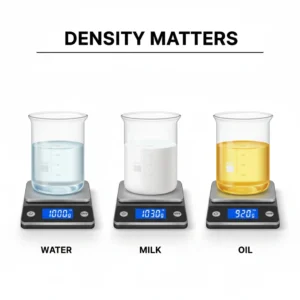
- Water: 1 gram = 1 milliliter (perfect 1:1 conversion)
- Milk: ~1.03 grams per milliliter
- Oil: ~0.92 grams per milliliter
- Honey/Syrup: heavier due to density
This is why professional bakers prefer weight-based measuring for baking it improves baking consistency, especially for recipes sensitive to moisture.
Why the Tare Function Is Non-Negotiable
If you don’t use the tare function, your measurements will be wrong period. The tare feature subtracts the container’s weight, letting you measure only the liquid. This is essential when measuring small quantities, sauces, oils, or coffee water ratios.
Digital kitchen scales excel here, while mechanical scales struggle with precision and drift.
Kitchen Scale Accuracy Tips for Liquids
To keep accuracy high:
- Always measure liquids in grams, not fluid ounces
- Use a flat, stable surface
- Avoid exceeding the scale capacity
- Re-calibrate your kitchen scale regularly
When used correctly, a calibrated digital scale outperforms traditional liquid measuring cups in almost every scenario especially baking, coffee brewing, and recipe scaling.
Common Mistakes When Using a Kitchen Scale for Liquids (And How to Avoid Them)
Many people ask “Can I use a kitchen scale for liquids?” and technically the answer is yes but only if you avoid some very common mistakes. Most accuracy problems don’t come from the scale itself; they come from how the scale is used. Understanding these pitfalls is critical for baking precision, liquid measurement accuracy, and consistent recipe results.
One of the biggest mistakes is confusing weight with volume. Liquids like water, milk, oil, and honey all weigh differently because of density differences. For example, 100 grams of water equals about 100 milliliters, but 100 grams of oil equals less volume. This is why blindly converting grams to milliliters without understanding liquid density leads to errors. A kitchen scale measures weight, not volume and that distinction matters.
Ignoring Liquid Density and Conversion Rules
Density plays a major role in liquid measurement. While water has a near 1:1 ratio (1 gram ≈ 1 milliliter), other liquids vary:
- Oil is lighter than water
- Honey and syrup are heavier
- Milk sits somewhere in between
If you’re using a kitchen scale to measure liquids, always rely on weight-based recipes or verified conversion charts. This is especially important for baking consistency, professional foodservice work, and recipe conversion.
Why Measuring Cups Sometimes Fail for Precision
Liquid measuring cups are designed for volume, but they are prone to human error especially when measuring small quantities. A kitchen scale, when used correctly, eliminates guesswork. However, the mistake happens when users expect the scale to automatically translate grams into fluid ounces or milliliters accurately. That translation only works when density is accounted for.
Forgetting to Use the Tare Function
Another major error is skipping the tare function. If you place a bowl, cup, or container on the scale and don’t zero it out, the measurement will include the container’s weight. This leads to inaccurate liquid measurement and inconsistent results.
Correct method:
- Place empty container on the scale
- Press tare to reset to zero
- Pour the liquid slowly
- Stop at the desired weight
This technique is essential whether you’re measuring oils, water, milk, or coffee using a digital kitchen scale.
Using an Uncalibrated or Low-Capacity Scale
Kitchen scale calibration is often overlooked. Over time, scales drift and lose accuracy especially mechanical or budget digital models. If your scale isn’t calibrated, even perfect technique won’t give reliable results.
Common warning signs:
- Scale jumps between numbers
- Readings change without adding liquid
- Inconsistent results across recipes
Regular calibration and checking scale capacity ensures accurate weight measurement for both liquids and solids.
Choosing the Wrong Unit of Measurement
Many users accidentally measure liquids in ounces instead of grams, assuming they’re interchangeable. Ounces can represent either weight (oz) or volume (fl oz), which creates confusion.
Best practice:
- Use grams for liquids whenever possible
- Switch units intentionally
- Avoid fluid ounces unless the scale specifically supports accurate liquid density mapping
Why Avoiding These Mistakes Matters
When you avoid these errors, a kitchen scale becomes one of the most powerful tools for:
- Baking precision
- Portion control
- Weight-based measuring for baking
- Consistent ingredient measurement
- Professional-level accuracy at home
Used correctly, a digital kitchen scale is far more reliable than measuring cups, especially for liquids but only when technique, density, and calibration are respected.
FAQs:
Q: Can I use a kitchen scale for liquids instead of measuring cups.?
Yes, you can use a kitchen scale for liquids, and in many cases it’s more accurate than measuring cups. By weighing liquids in grams or ounces and accounting for density, you avoid errors caused by meniscus lines or uneven pouring. This method is especially useful in baking, coffee brewing, and precision cooking.
Q: Can you use a food scale to measure liquids like water or milk.?
Absolutely. Water, milk, and similar liquids can be measured reliably using a digital kitchen scale. Since water has a 1:1 ratio (1 gram = 1 milliliter), it’s very straightforward. Milk and oils require slight density awareness, but a scale still delivers consistent results.
Q: Can a kitchen scale measure liquid volume directly.?
A kitchen scale measures weight, not volume. However, by using known conversions (grams to milliliters), you can accurately calculate liquid volume. This is why many professional kitchens prefer weight-based measuring for liquids.
Q: Is using a kitchen scale for liquids accurate for baking.?
Yes, and it’s actually the preferred method for baking precision. Baking depends on exact ratios, and weighing liquids ensures consistency, especially when measuring oils, water, milk, or syrups.
Q: Can I use a kitchen scale for liquids when making coffee.?
Definitely. Using a kitchen scale for coffee brewing improves consistency and flavor. Measuring water by weight ensures repeatable brew ratios, which is why baristas and coffee professionals rely on digital scales.
Q: Can a kitchen scale weigh both dry and liquid ingredients.?
Yes. A kitchen scale can handle dry ingredients, solid foods, and liquids as long as you use the tare function properly and understand density differences between ingredients.
Q: Do I need to calibrate my kitchen scale for liquid measurements.?
Calibration is important for accuracy. While liquids don’t require special calibration settings, ensuring your kitchen scale is properly calibrated improves overall measurement reliability.
Q: Is a digital kitchen scale better than a mechanical one for liquids.?
Yes. Digital kitchen scales offer better precision, faster response times, and easier unit conversion, making them more suitable for measuring liquids accurately.
Q: Can I use a bathroom scale to measure liquids or food.?
No. Bathroom scales lack the precision needed for small quantities. A kitchen scale is specifically designed for accurate ingredient and liquid measurement.
Q: What units should I use on a kitchen scale for liquids.?
Grams and ounces are the most reliable units. Fluid ounces on scales can be misleading, so weight-based units combined with conversion charts provide better accuracy.
Conclusion:
So, can I use a kitchen scale for liquids?
Yes and in many situations, it’s actually the better choice.
Using a kitchen scale removes guesswork, improves accuracy, and delivers consistent results across cooking, baking, coffee brewing, and even portion control. While traditional liquid measuring cups still have their place, weight-based measurement gives you control that volume-based tools simply can’t match.
The key is understanding the difference between weight and volume. Liquids don’t all behave the same water, milk, and oil each have different densities. Once you factor that in and use the tare function correctly, a digital kitchen scale becomes one of the most powerful tools in your kitchen.
If your goal is:
- Better baking consistency
- Accurate liquid measurement
- Professional-level results at home
Then a kitchen scale isn’t just useful it’s essential.
When used properly, it simplifies recipes, improves repeatability, and helps you cook with confidence rather than approximation.